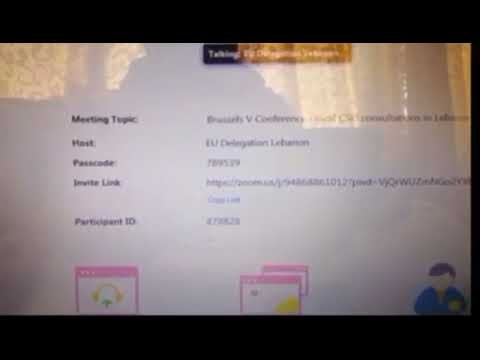
Ahead of the fifth Brussels Conference — held virtually on 29 and 30 March 2021 to discuss the Syrian crisis on the tenth anniversary of its outbreak, along with the future of the region — local pre-conference consultations between civil society and the international community began on 23 and 25 February. The consultations addressed the situation of refugees in host countries across the various human rights sectors.
Developmental Action Without Borders / Naba’a took part in the local consultations on the education sector. Drawing on its direct work with the local community, and in particular with refugee children and the advocacy of their rights, it addressed the impact of successive crises on education in Lebanon and the way other child rights are affected when children cannot reach education: rising early marriage, violence and exploitation of children in all its forms, and child labour.
Naba’a in turn put forward a set of recommendations to secure children’s access to education and to reduce the consequences of education not being available to every child without exception. The most important of them were:
- That the government develop the curriculum so that it keeps pace with technological progress, and draw up a response plan for children’s access to education.
- That a practical plan be produced in cooperation with the municipalities, setting out a mechanism to accommodate every child without exception, with all the supplies education requires.
- That the Ministry of Education monitor and implement the distance-learning plan and develop it as circumstances change.
- That the Ministry of Education and the Ministry of Telecommunications cooperate to provide students with the electronic devices and internet packages they need, and to train teaching staff in the use of communication software.
Its recommendations to donors were that the RACE II programme be fully funded and that past pledges be honoured, and that funding be strengthened to provide teaching materials, equipment and internet access and to cover the cost of community programmes that build the capacity of parents and teaching staff in distance-learning systems.
It also stressed the role of civil society organisations in following up awareness campaigns for children and parents on the importance of education, on protecting children from cyber violence and its effects, on providing psychosocial support, and on building the capacity of children and parents to use technology.
To watch the video, click here.